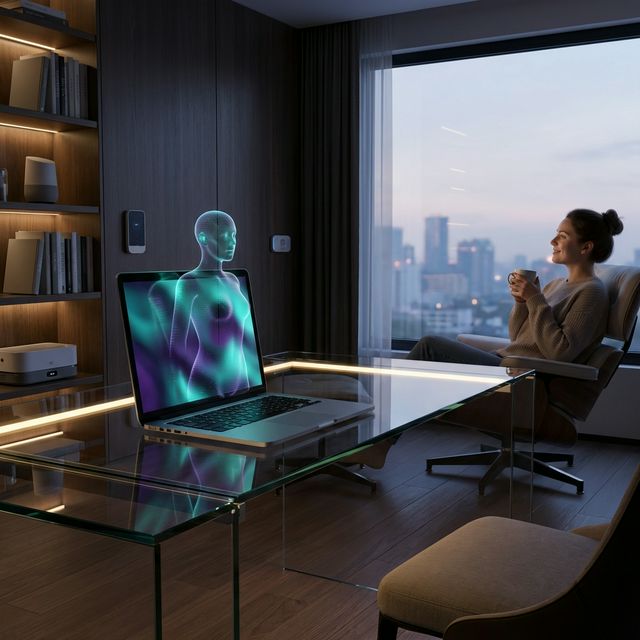
🦾 The Shadow Productivity Movement: Core Data
- The 68% Threshold: A 2026 survey revealed that 68% of knowledge workers use "unauthorized" AI agents to handle routine tasks.
- Time Recovery: On average, "Quiet Automators" reclaim 14 hours per week through personal automation workflows.
- Managerial Blind Spot: Only 12% of employers are aware of the extent of personal automation happening within their teams.
- The Efficiency Paradox: Teams practicing quiet automation show a 40% higher output quality, despite appearing "less busy" in tracking software.
In 2022, "Quiet Quitting" was the headline that defined a generation’s fatigue. It was a passive-aggressive boundary: doing exactly what the job description required and nothing more. It was a protest against the "hustle culture" that had reached its breaking point.
But by 2026, that boundary has shifted from psychological to technological. We have entered the era of Quiet Automation. Instead of doing the bare minimum manually, workers are using low-code tools and AI agents to do the maximum automatically—while letting their employers believe it still takes 40 hours a week.
1. From Disengagement to Digital Leverage
The core difference between the 2022 quit and the 2026 automate is intent. Quiet quitting was about protecting energy; quiet automation is about creating leverage. The modern worker has realized that if they can automate a task that used to take 5 hours into a 30-second script, they gain 4 hours and 59 minutes of "sovereign time."
This is "Shadow Productivity." While HR departments are busy debating return-to-office mandates, the workforce has decoupled their time from their value. The implication? The traditional "hourly rate" is becoming a legacy metric in a world of algorithmic output.
2. The Toolkit of the Invisible High-Performer
How is this happening? The democratization of automation tools has moved beyond the IT department. Tools like Make.com, Zapier Central, and local-first AI agents (like Ollama or AutoGPT-2026) allow a marketing manager or a junior accountant to build complex logic without writing a single line of code.
| Legacy Task | Manual Time | Quiet Automation Method | New Time |
|---|---|---|---|
| Weekly Report Aggregation | 4 Hours | API-Triggered LLM Summarization | 5 Minutes |
| Email Triage & Drafts | 2 Hours/Day | Fine-tuned Personal Content Agent | 15 Minutes |
| Data Entry/CRM Update | 6 Hours/Week | Browser-based AI Interaction Agents | 0 Minutes |
Why this matters: These tools are often outside the firm's central "Tech Stack." This creates a significant security and governance gap, but for the worker, it is the only way to survive the "AI Workslop" that modern companies are now generating in bulk.
3. The Management Reality: Oversight vs. Results
There is a growing tension between "Surveillance Tech" and "Quiet Automation." Companies using aggressive mouse-tracking or screen-recording software are seeing higher burnout but lower actual innovation. In contrast, "Quiet Automators" often have to build "Active Simulations"—small scripts that move the mouse or simulate keypresses—just to keep the surveillance software happy while their AI does the actual work.
Insight → Implication → Reality:
Insight: Managers value the appearance of effort.
Implication: Skilled workers spend 20% of their day faking effort to hide their 80% automation efficiency.
Reality: We are paying for "Digital Theater" instead of rewarding the literal 10x engineering happening in shadow pockets.
4. Beyond 2026: The "Agentic" Career
Looking forward, the concept of a "Job Description" will likely be replaced by "Service Level Agreements" (SLAs) for humans. If you can provide the result your employer needs by managing a fleet of agents, you are no longer an employee; you are a Human-Agent Hybrid Consultant. The workers who thrived in the "Quiet Automation" phase are the ones who will own this new economy.
The Bottom Line: Rewarding Results, Not Hours
Quiet Automation is a rational response to an irrational workplace. As long as corporate culture continues to reward "hours sat in a seat" over "value created for the firm," workers will continue to use the tools available to them to protect their most valuable asset: time. The companies that will win the 2026 talent war are those that stop asking "Where are you working from?" and start asking "How did you automate this so effectively?"