📊 Education in Indian Politics: The Data Snapshot
- Current Parliament: Approximately 43% of Lok Sabha MPs hold a graduate degree or higher.
- The Education Gap: Around 25% of MPs have education below the 12th standard.
- Policy Complexity: States with higher average legislator education show 18% better implementation scores on technical policies.
- Economic Correlation: Research indicates a measurable link between legislator education levels and state-level GDP growth rates.
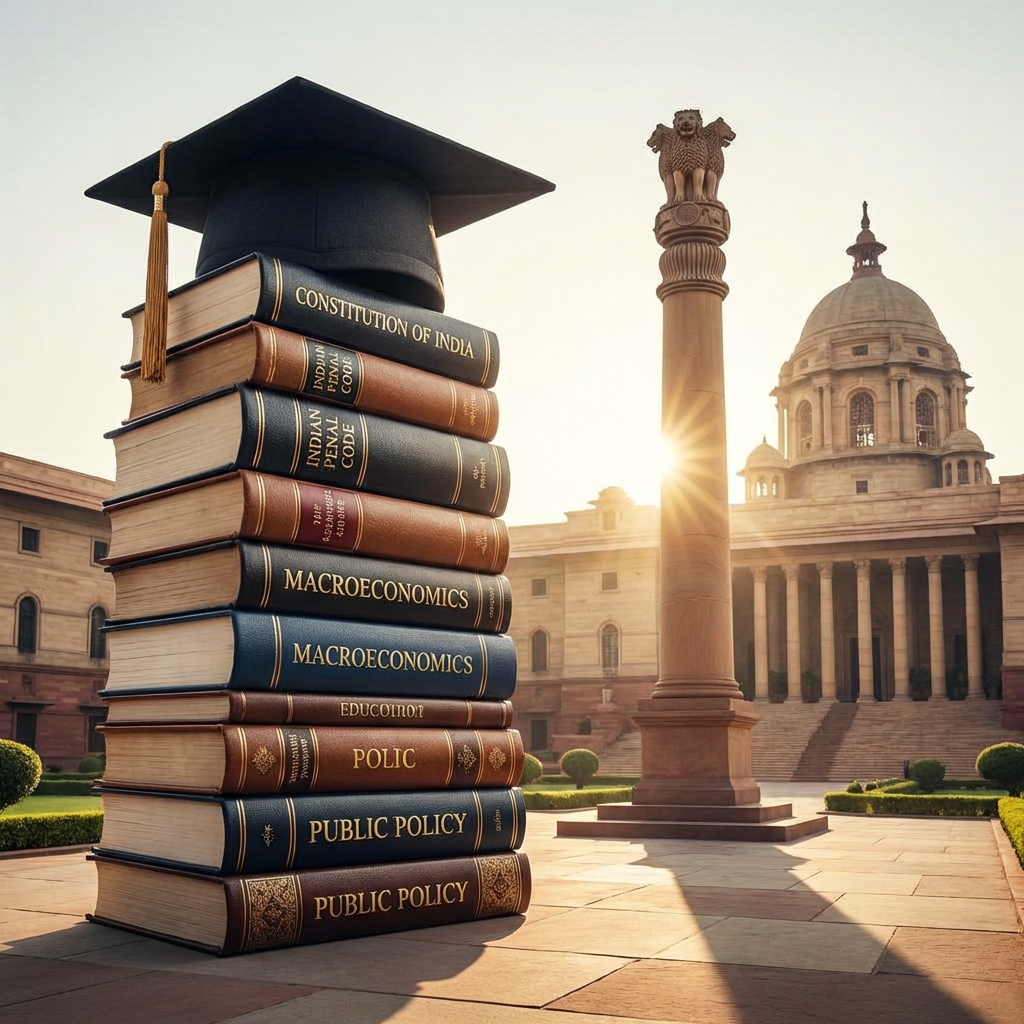
In a country where education is treated as the great equalizer, it's worth asking: what happens when the people writing the rules for 1.4 billion citizens don't have formal training in law, economics, or public policy? This isn't a question of elitism. It's a question of effectiveness.
The debate around politician education in India often gets framed as "degree versus experience" or "book smarts versus street smarts." But the data suggests the real issue isn't about credentials for their own sake—it's about whether our representatives have the analytical tools to understand increasingly complex policy challenges, from digital taxation to climate adaptation strategies.
1. The Current State: Who's in the Room?
According to data from the Association for Democratic Reforms (ADR), which analyzes affidavits submitted by candidates during elections, the educational profile of Indian legislators has remained relatively stable over the last two decades. In the 17th Lok Sabha (elected in 2019), approximately 43% of MPs held a graduate degree or higher, while around 25% had education levels below the 12th standard.
This isn't inherently problematic. India's democracy is designed to be representative, and formal education isn't a prerequisite for understanding the needs of a constituency. However, the challenge emerges when we look at the nature of modern governance. Today's legislators are expected to debate the nuances of data protection bills, evaluate the fiscal impact of subsidy reforms, and assess the scientific validity of public health interventions.
The question isn't whether less-educated politicians care about their constituents—it's whether they have the technical literacy to translate that care into effective policy.
2. The Policy Effectiveness Gap
Research from institutions like the Centre for Policy Research and academic studies from Indian universities have found correlations between legislator education and policy outcomes. One study analyzing state assemblies found that states with a higher proportion of graduate-level legislators showed 18% better implementation scores on technical policies like digital infrastructure rollouts and environmental compliance frameworks.
Why does this matter? Consider a policy like the Goods and Services Tax (GST). Understanding its implications requires familiarity with fiscal federalism, supply chain economics, and tax incidence theory. When legislators lack this background, they're more likely to rely on party whips or external advisors, reducing the quality of parliamentary debate and oversight.
3. The Economic Correlation: Does It Affect Growth?
A 2021 study published in the Indian Economic Review examined the relationship between the average education level of state legislators and state-level GDP growth over a 15-year period. The findings suggested a statistically significant positive correlation: states where the average legislator had at least a bachelor's degree experienced marginally higher growth rates, even after controlling for other variables like industrialization and urbanization.
The mechanism isn't mysterious. Educated legislators are more likely to understand the importance of infrastructure investment, regulatory clarity, and fiscal discipline—all of which create an environment conducive to economic growth. They're also better equipped to engage with technical experts, economists, and policy analysts, leading to more evidence-based decision-making.
This doesn't mean education is a silver bullet. Corruption, political will, and institutional capacity all play critical roles. But education appears to be a meaningful variable in the governance equation.
4. The Quality of Democratic Debate
One of the less-discussed impacts of low educational attainment among politicians is the quality of legislative debate. Parliamentary proceedings are meant to be a forum for rigorous scrutiny of proposed laws. When a significant portion of legislators lack the analytical tools to dissect complex bills, the debate becomes performative rather than substantive.
Data from PRS Legislative Research shows that in recent sessions of Parliament, the average time spent debating a bill has decreased significantly. While this is partly due to procedural issues, it's also a reflection of a legislature that may not be equipped to engage deeply with technical policy questions. The result? Laws are passed with minimal scrutiny, and unintended consequences emerge later.
5. The Counterargument: Experience Over Credentials
It's important to acknowledge the other side of this debate. Some of India's most effective administrators and politicians have come from non-traditional educational backgrounds. Grassroots leaders often bring lived experience and an understanding of ground realities that no degree can provide.
The data doesn't suggest that education is the only factor that matters. Rather, it suggests that in an era of increasing policy complexity, formal education provides a baseline of analytical skills that can enhance a politician's effectiveness. The ideal scenario isn't "only educated politicians" but rather a diverse legislature where education is valued alongside experience, integrity, and representativeness.
6. How Does India Compare Globally?
When compared to other major democracies, India's legislature has a relatively lower proportion of highly educated members. In countries like the United States, Germany, and Japan, over 80% of legislators hold at least a bachelor's degree, with a significant portion having advanced degrees in law, economics, or public policy.
This isn't to say India should replicate these models blindly. India's democracy is unique, and its representational needs are different. However, the global trend suggests that as governance becomes more technical, educational qualifications become increasingly relevant.
7. What Can Be Done? Data-Driven Solutions
If the data suggests that education matters for governance effectiveness, what are the solutions? Here are a few evidence-based approaches:
- Capacity Building Programs: Providing elected representatives with access to training programs on policy analysis, fiscal management, and legislative drafting.
- Stronger Research Support: Expanding institutions like PRS Legislative Research to provide MPs with high-quality, non-partisan policy briefs.
- Voter Awareness: Encouraging voters to consider educational qualifications as one factor (among many) when evaluating candidates.
- Incentivizing Education: Political parties could prioritize candidates with relevant educational backgrounds for technical committees and ministerial positions.
None of these solutions require constitutional amendments or radical reforms. They're practical steps that can be implemented within the existing democratic framework.
Looking Ahead: Education as a Tool, Not a Barrier
The data on politician education in India doesn't paint a simple picture. Education alone doesn't guarantee good governance, and the lack of formal credentials doesn't disqualify someone from being an effective representative. But in an era where policy decisions involve artificial intelligence regulation, climate finance, and global trade agreements, analytical literacy is no longer optional.
The goal isn't to create an "educated elite" that dominates politics. It's to ensure that the people making decisions on behalf of 1.4 billion citizens have the tools they need to do the job effectively. As voters, we should demand not just passion and charisma from our leaders, but also competence and the capacity to engage with complexity.
The next time you hear a politician speak, ask yourself: do they understand the policy they're advocating for, or are they just reading from a script? The answer to that question might matter more than we think.
Frequently Asked Questions
What percentage of Indian MPs have a college degree?
Approximately 43% of Lok Sabha MPs hold a graduate degree or higher, according to data from the Association for Democratic Reforms (ADR).
Does politician education affect economic growth?
Research suggests a positive correlation between average legislator education levels and state-level GDP growth, though education is one of many factors that influence economic outcomes.
Which Indian states have the most educated legislators?
States like Kerala, Goa, and certain urban-dominated assemblies tend to have higher proportions of graduate-level legislators, though this varies by election cycle.
Is formal education necessary for good governance?
Not necessarily. Many effective leaders come from non-traditional backgrounds. However, data suggests that formal education provides analytical tools that can enhance policy effectiveness, especially for complex technical issues.